Ka ʻohana · the family
Ka moʻolelo o kā mākou ʻohana
Our hānai ʻohana story
Written by
Kaʻo Carlos
Son of Palani Elua, haumāna; hānai ʻohana — chosen, adopted-in grandchild of Aunty Alice.
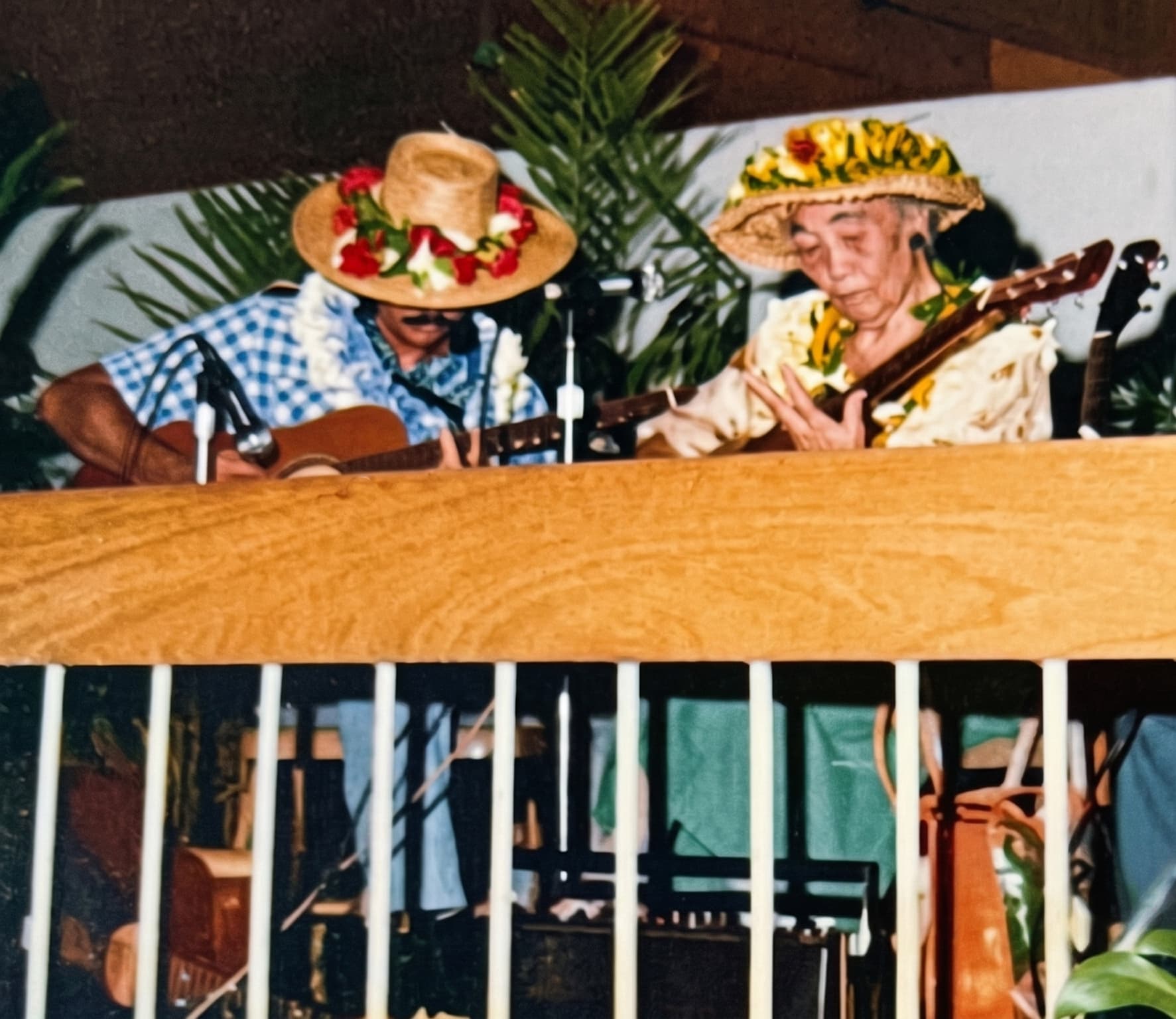
My father, Palani Elua, learned kī hōʻalu from Aunty Alice at her home. Saturday after Saturday he would drive over with his guitar, and I would tag along — a kid underfoot, poking around her things while the two of them worked through a song. Over those years she took us in as hānai ʻohana: adopted, fed, cared for — chosen family in the Hawaiian sense.
As she got older, the lessons quietly became something else. We still brought the guitar, but the visits turned into making sure she was fed, comfortable, loved. She had given so much to so many haumāna; it was time for us to give back. That is what hānai ʻohana is — it is not a transaction, it is a long conversation, carried across generations.
This site is for her. It is also for every person she taught, named or unnamed, and for the music she wrote so it would outlive her. Everything we can imagine should be real, she might have said in her own language, had she put it that way.
Ke kaʻana · the passing-down
Her legacy.
Her haumāna are not a complete list — she taught privately, and much of the teaching happened in homes, at kitchen tables, without rosters. This is what is publicly attested, plus what our ʻohana knows firsthand.
Palani Elua
Haumāna and hānai ʻohana. Learned kī hōʻalu from Aunty Alice over many years at her home. Still carries what she taught him — and, in time, will pass it on.
Kaʻo Carlos
Son of Palani, hānai ʻohana of Aunty Alice. Grew up underfoot at her home during Saturday lessons. Steward of this site — the return on what she gave this family.
Keola Beamer (opens in new tab)
One of the most influential slack key guitarists of the Hawaiian Renaissance. He credits Aunty Alice as his special mentor for Hawaiian slack key guitar and has published instructional material in her G Wahine tuning (kbeamer.com, BEG-20).
George Kuo (opens in new tab)
Two-time Nā Hōkū Hanohano Award winner for Instrumental Album of the Year (1995, 1996), carrying the nahenahe — sweet, traditional — style. Studied with Aunty Alice alongside Palani, part of the same weekend circle at her home.
If you were taught by Aunty Alice — or by one of her haumāna — and would like to be named here, please reach out. This site will add every name it can verify.
Ka hoʻomanaʻo · remembering her
Her voice, in her own words.
In this archival interview, Aunty Alice introduces and sings Waimea Kuʻu One Hānau — the mele she composed for her birth land. Below, the places we keep returning to when we want to be near her again.
ʻUluʻulu Archive (opens in new tab)
Photos of Aunty Alice Nāmakelua, plus the 1974 Pau Hana Years interview footage. UH West Oʻahu.
Kealopiko (opens in new tab)
A cultural essay and photo feature on her life, from a Hawaiian-owned and Hawaiian-led studio.
Hawaiian Music Walk of Fame (opens in new tab)
Her bronze plaque in Waikīkī, near where Queen Liliʻuokalani once composed music.