Ke aloha nui · with great love
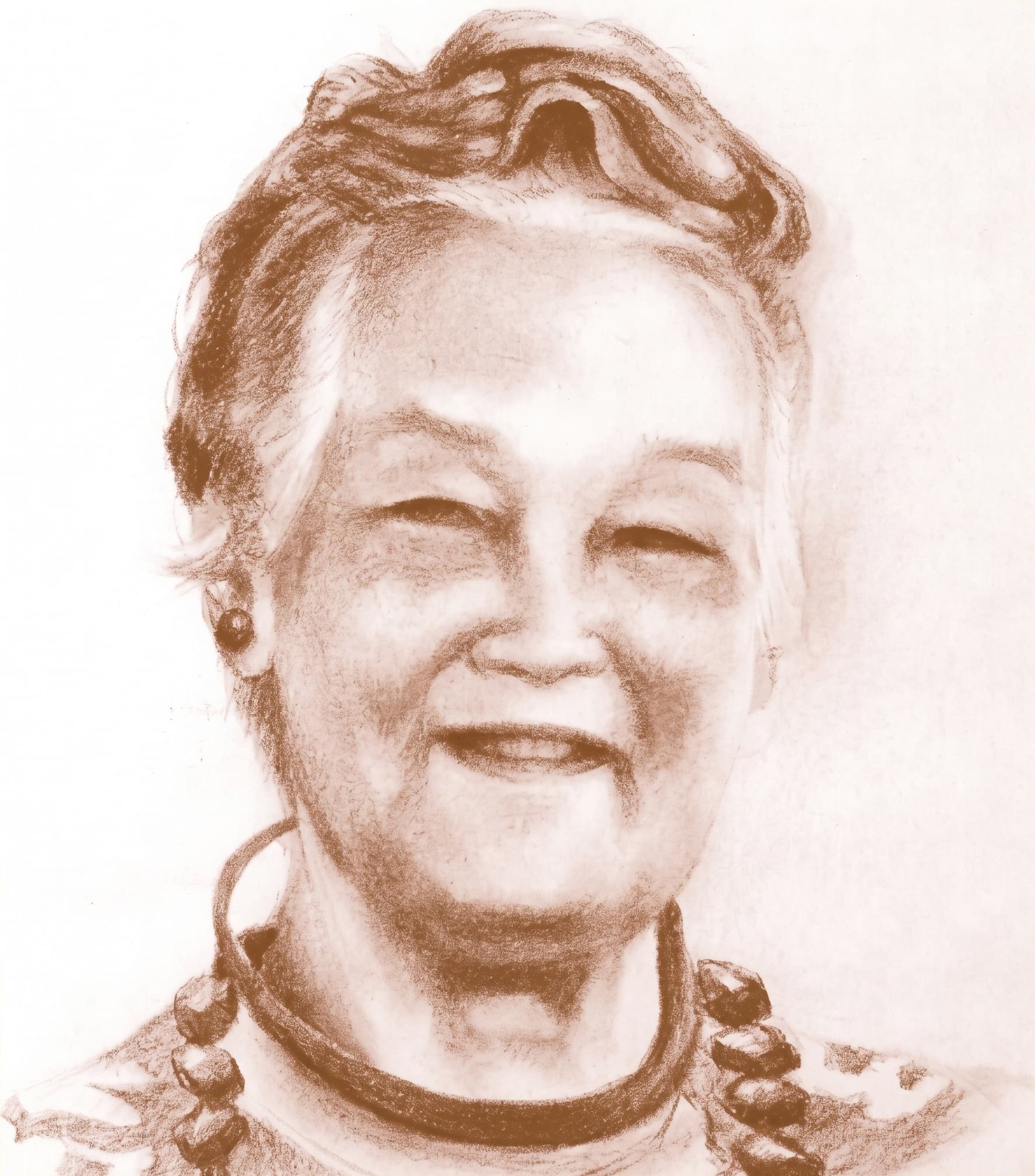
Alice Kuʻuleialohapoinaʻole Kanakaoluna Nāmakelua
1892 – 1987 · Kumu, haku mele, mea hoʻokani pila.
She was born a year before the overthrow of Queen Liliʻuokalani and lived to see the first Hawaiian-medium schools of the modern era. Between those bookends she composed nearly two hundred mele, taught thousands of keiki in the parks of Honolulu, and carried the oldest slack key style ever recorded from her childhood in Hāmākua into the Hawaiian Renaissance.
Why she matters
Kī hōʻalu — slack key — began in the 1830s when Mexican vaqueros, brought to Hawaiʻi to teach paniolo to manage feral cattle, left their Spanish guitars behind. Hawaiians loosened the strings into open tunings that suited their own voices. For over a century the style was kept close, passed within ʻohana, often only to sons.
Aunty Alice is one of the very few women in its foundational canon. She is also reported to be the first woman to play the Hawaiian steel guitar. She learned in the 1890s and never modernized her playing — so her 1974 recordings are the only primary-source window we have into how slack key sounded before Gabby Pahinui's generation reshaped it.
And she was a mānaleo — a native speaker of ʻōlelo Hawaiʻi in an era when the language was actively being extinguished. She did not hoard the old style the way some older players did. She taught openly, to anyone willing to sit quietly and listen.
Ka papa manawa · the timeline
Her life, year by year.
Drawn from Wikipedia, Kaʻiwakīloumoku, ʻUluʻulu, the Hawaiian Music Hall of Fame, and the Hula Records 1974 liner notes. Dates corroborated across at least two sources where possible.
- 1892
Born at Kīhālani
Born August 12 in the Honokaʻa / Hāmākua district of Hawaiʻi Island, one year before the overthrow of Queen Liliʻuokalani.
- c. 1900
Begins kī hōʻalu at age 8
Learns slack key guitar in the 1880s–1890s style then being passed within Big Island families — the earliest style ever documented.
- Teen years
Plays for Queen Liliʻuokalani
Performs in ʻōlelo Hawaiʻi for the deposed queen. One personal memory away from the Hawaiian Kingdom itself.
- 1927
Moves to Honolulu
With first husband Solomon Nāmakelua. Widowed in 1929; raises two children on her own.
- 1944
Joins City & County Parks & Rec
Twenty-four years as a playground director. Teaches thousands of keiki hula, mele, and ʻōlelo Hawaiʻi in the city parks.
- 1950
Composes ʻIʻiwi aʻo Hilo
Written for the Big Island float of the Kamehameha Day Parade; her sonic signature, and her own chosen name for herself.
- 1972
Named most significant contributor to Hawaiian music
By the Hawaiian Music Foundation.
- 1974
Records her first album — at age 82
Hula Records 552. On being asked about recording so late in life: “It’s a fine time in life for that!”
- 1987
Passes at age 94
In Hauʻula, Oʻahu. Buried on Oʻahu.
- 2011
Inducted posthumously into the Hawaiian Music Hall of Fame
Ke kī · the tuning
G Wahine
D – G – D – F♯ – B – D
Also called Auntie Alice Nāmakelua’s G Tuning, Double Slack, or F♯ Tuning. Her signature tuning. Every serious slack key player knows it; many learned it from her.
E nānā · see further
Keola Beamer — one of her most famous haumāna — published a lesson in her tuning called simply Aunty Alice Slack Key (kbeamer.com, BEG-20). Jeff Peterson teaches her Ka Manu as a tribute piece. Dancing Cat Records' Hawaiian Slack Key Information Booklet, compiled by George Winston, describes her style as “the earliest slack key style ever documented”.
From our hānai ʻohana
My father, Palani Elua, was her haumāna. I would go with him to her house on the weekends while he worked on a song. I was a kid, poking around her things, not really a student — but in Hawaiian tradition, the presence is part of the learning. Over those years she took us in as hānai ʻohana — chosen, adopted-in family.
As she got older, the lessons quietly became care. Mālama — to care for, to steward — is not a chore in Hawaiian life; it is the return on every gift. She had spent decades giving her music away. It was simply our turn.
This website is part of that return.
— Kaʻo Carlos, hānai ʻohana
Nā waihona · the archives
Where you can hear her, and read about her, in her own voice.
These are the primary-source institutions that hold her recordings, interviews, and photographs. Go to them first.
ʻUluʻulu — Henry Kuʻualoha Giugni Moving Image Archive (opens in new tab)
Holds the 1974 Pau Hana Years interview footage and the Aunty Alice photo folder. UH West Oʻahu.
Kaniʻāina / Ulukau (opens in new tab)
Ka Leo Hawaiʻi 074 — a full-length 1974 radio interview with Larry Kimura, in ʻōlelo Hawaiʻi.
Kaʻiwakīloumoku Hawaiian Cultural Center (opens in new tab)
Liner-note-level annotations for ʻIʻiwi aʻo Hilo, Ka Manu, and other mele at Kamehameha Schools.
Hawaiian Music Hall of Fame (opens in new tab)
Her 2011 posthumous induction page.
Hawaiian Music Walk of Fame, Waikīkī (opens in new tab)
Her bronze plaque — near where Queen Liliʻuokalani once composed.
ʻŌlelo · a small glossary
Hawaiian words used on this site.
Aunty Alice was a mānaleo — a native speaker of ʻōlelo Hawaiʻi. We use Hawaiian words throughout the site with intention, not decoration. ʻOkina and kahakō are full letters of the language.
- kī hōʻalu
- slack key — to loosen the tuning pegs into open tunings
- kumu
- teacher; source; foundation
- haumāna
- student, disciple
- ʻohana
- family, including chosen and extended kin
- hānai
- adopted, raised, or fed — the Hawaiian bond of chosen family
- kupuna
- elder; ancestor
- mele
- song, chant, poem
- haku mele
- composer
- mānaleo
- a native speaker of ʻōlelo Hawaiʻi
- pau hana
- after-work — when slack key has always been played
- aloha ʻāina
- love of the land
- paniolo
- Hawaiian cowboy
- wahine
- woman — and a tuning family